Description
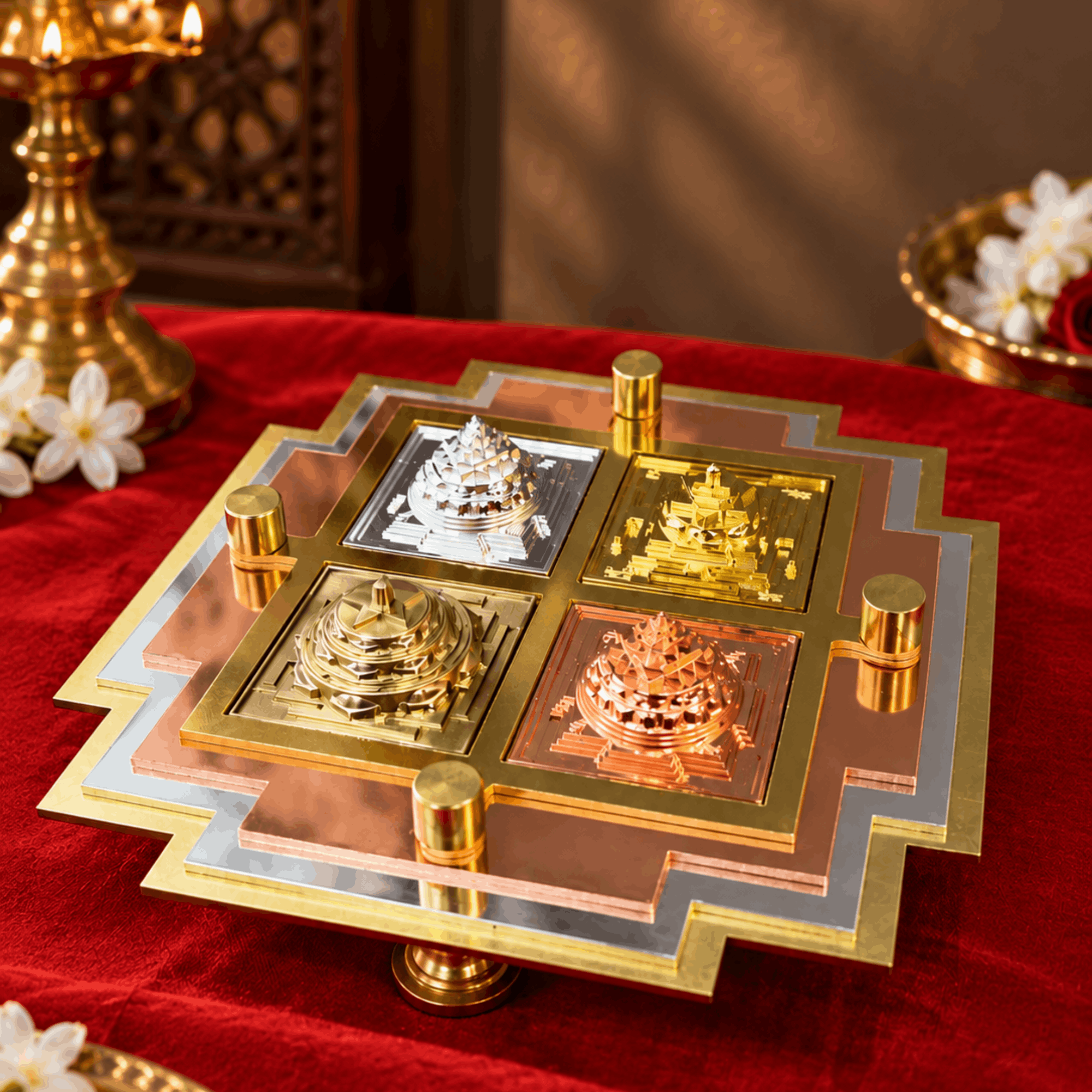
The Sri Sarva Siddhi Yantra is a distinctive sacred yantra from the Sanatan tradition, traditionally regarded as a symbol of prosperity, wisdom, success, positive energy, and spiritual harmony. It represents the eight divine siddhis—Anima, Mahima, Garima, Laghima, Prapti, Prakamya, Ishitva, and Vashitva—and brings together multiple sacred energies within one geometric framework.
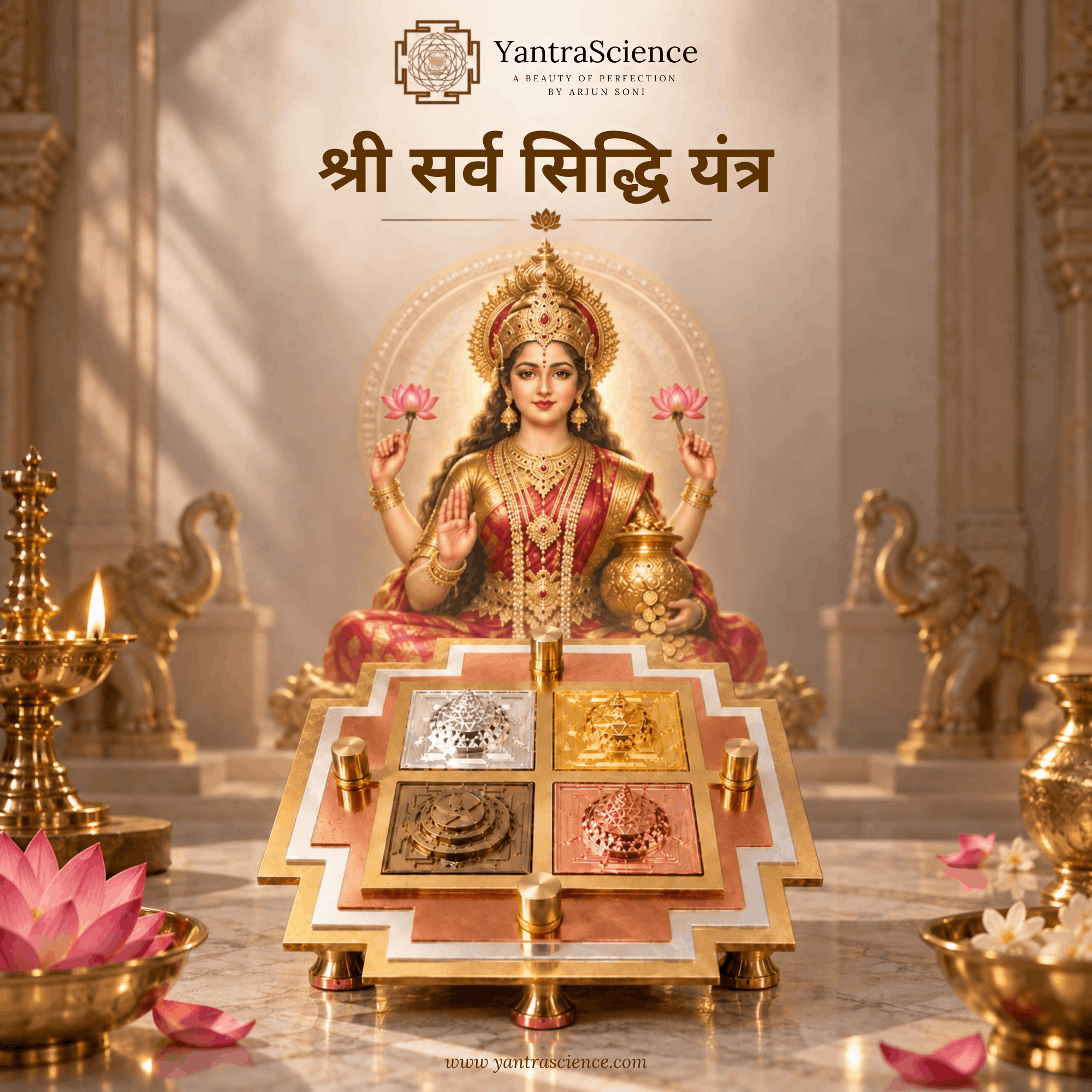
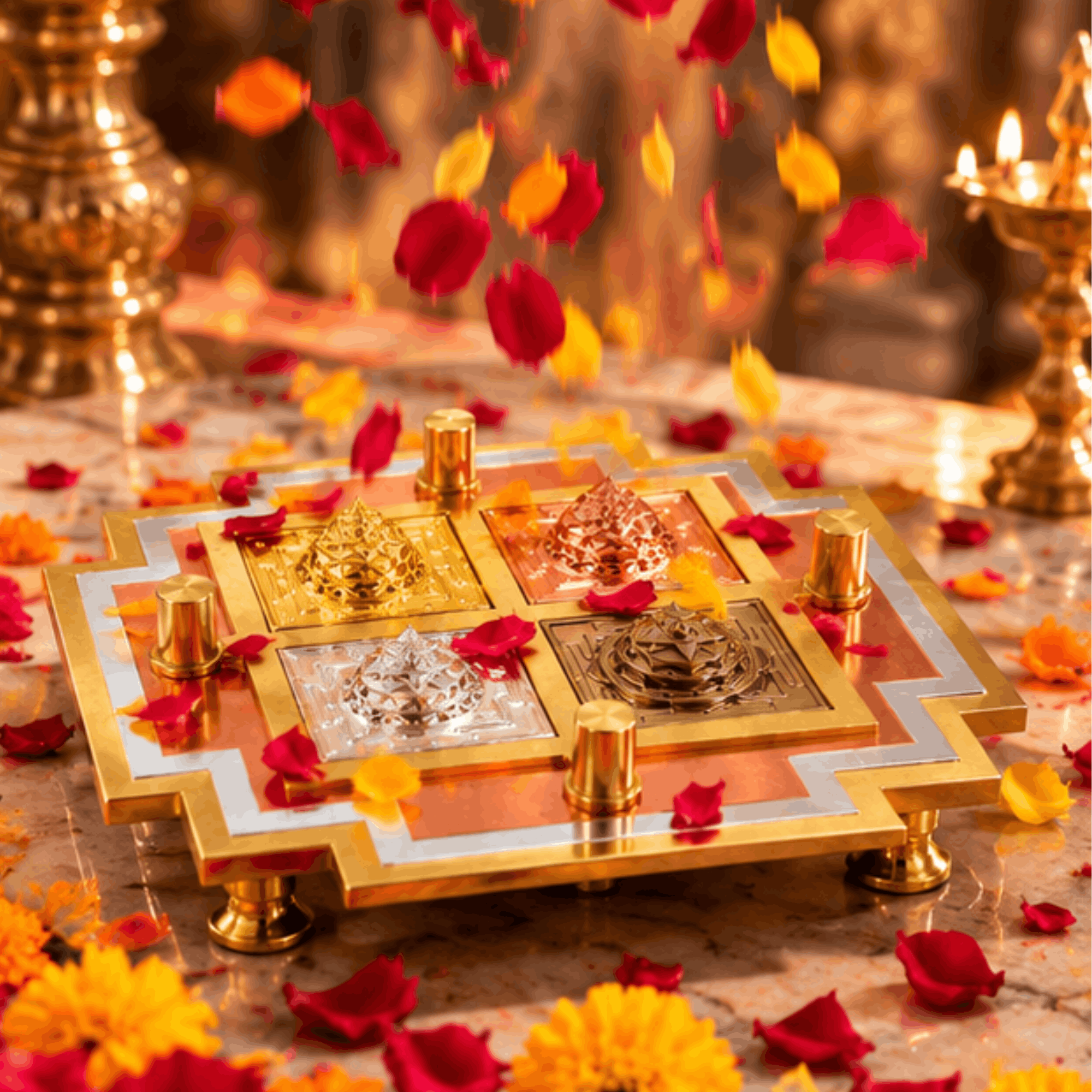
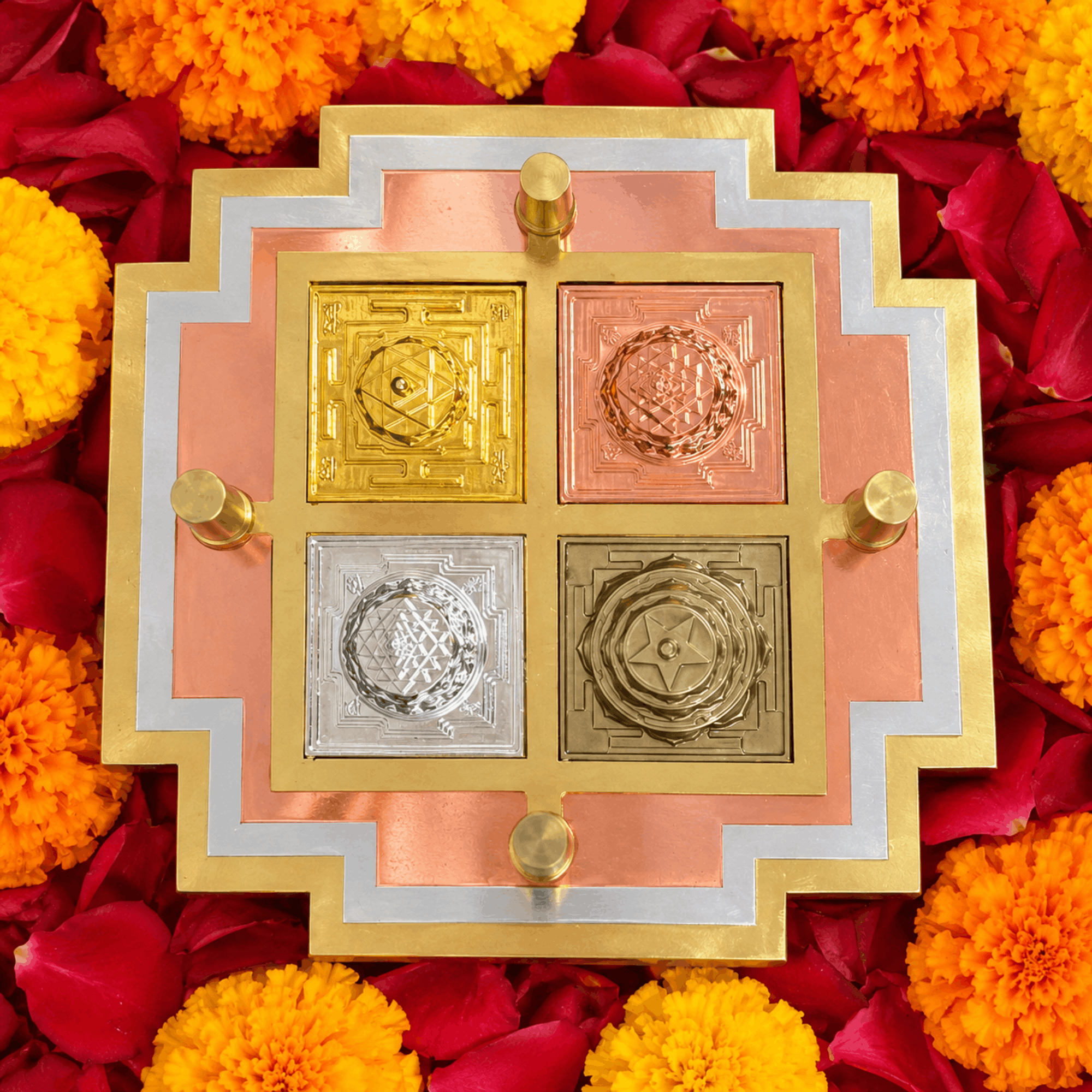
The yantra is primarily associated with the integrated symbolism of the Shree Yantra, Kuber Yantra, Ganesh Yantra, and Navgraha Yantra. Shree Yantra represents prosperity and good fortune; Kuber Yantra is traditionally connected with wealth, abundance, and financial stability; Ganesh Yantra symbolizes wisdom, focus, discernment, and the removal of obstacles; while Navgraha energies are associated with planetary balance and harmony.
The Sri Sarva Siddhi Yantra is traditionally installed in homes, temples, offices, study areas, meditation spaces, or other clean and peaceful places. It is regarded as a spiritual aid for encouraging a positive environment, mental peace, concentration, confidence, prosperity, family harmony, and balance in daily life. The catalogue also associates its sacred structure with the energies of Lord Shiva, Goddess Lakshmi, Lord Ganesha, Vastu, Navgraha, and Lord Kuber.
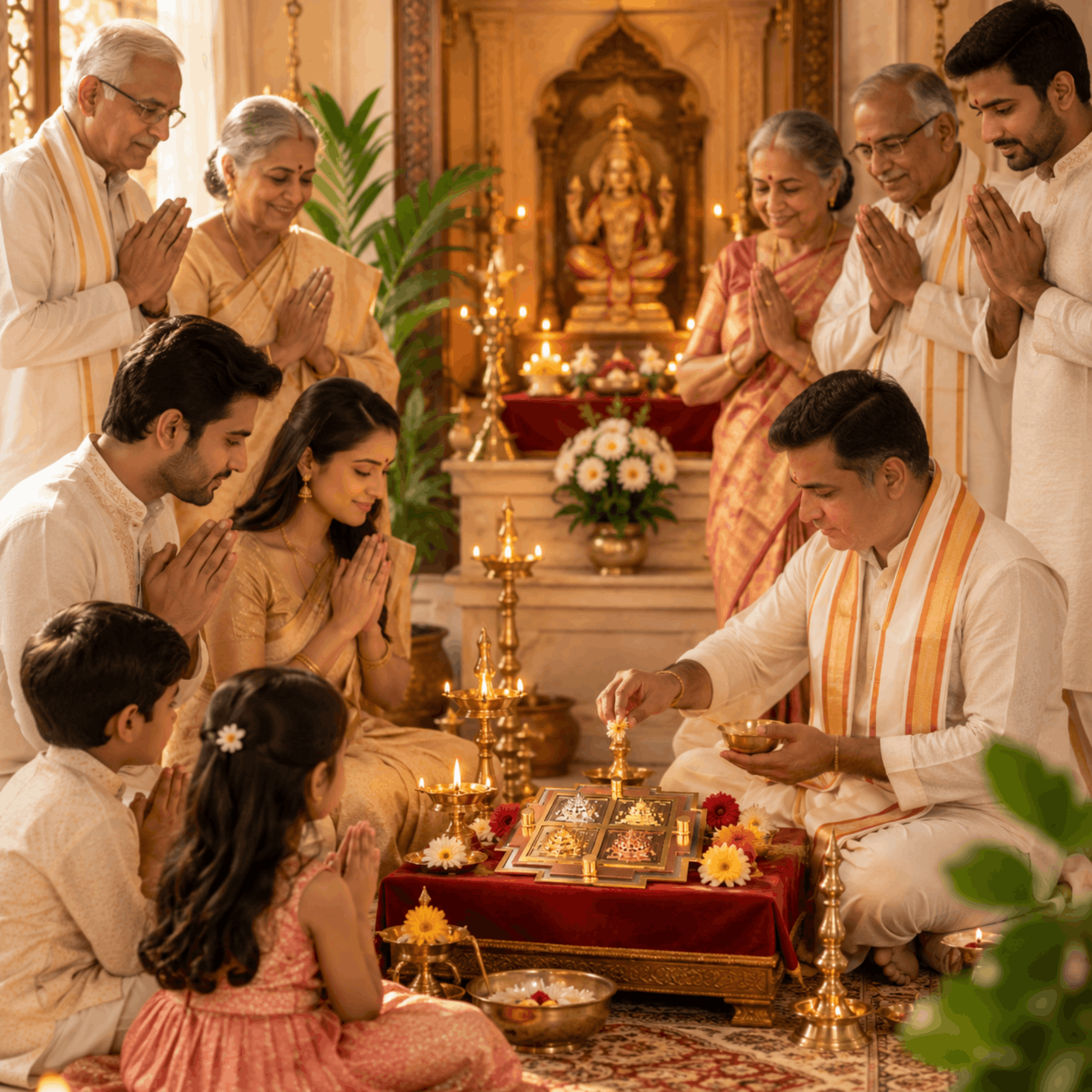
Depending on tradition and product design, the yantra may be crafted in Ashtadhatu and may undergo purification, Prana Pratishtha, and ritual energization before worship. Daily practice can include lighting a diya, offering fresh flowers and incense, and reciting an appropriate mantra, stotra, or Shri Suktam according to one’s tradition.
The Sri Sarva Siddhi Yantra is best understood not as a magical solution, but as a combination of sacred geometry, spiritual tradition, devotion, and mindful practice.
Product Name: Sri Sarva Siddhi Yantra
Spiritual Significance: Represents prosperity, wisdom, success, positive energy, balance, and spiritual harmony; traditionally associated with the eight divine siddhis
Divine Energies: Lord Shiva, Goddess Lakshmi, Lord Ganesha, Vastu–Navgraha, and Lord Kuber
Yantra Integration: Shree Yantra, Kuber Yantra, Ganesh Yantra, and Navgraha Yantra
Siddhis Represented: Anima, Mahima, Garima, Laghima, Prapti, Prakamya, Ishitva, and Vashitva
Material: Ashtadhatu (Eight Metals), depending on tradition and product design
Traditional Purpose: Positive energy, prosperity, mental peace, concentration, success, family harmony, and energetic balance
Ideal For: Home, temple, prayer room, meditation space, office, study area, or other clean and peaceful places
Installation: Traditionally performed through purification, Prana Pratishtha, and ritual energization (Abhimantran)
Daily Worship: Diya, fresh flowers, incense, and appropriate Mantra, Stotra, or Shri Suktam according to one’s tradition
General Benefits of Sri Sarva Siddhi Yantra
- Traditionally associated with prosperity, success, and positive energy
- Supports a peaceful and harmonious family environment
- Encourages concentration, clarity, and positive thinking
- Traditionally regarded as supportive of balance and well-being
- Associated with the removal of obstacles and wise decision-making
- Supports harmony and positivity in the home and workplace
Spiritual Benefits
- Supports regular prayer, meditation, and spiritual practice
- Traditionally associated with inner strength, patience, and mental peace
- Encourages devotion, mindfulness, and a positive approach to life
- Represents the combined sacred energies of Lord Shiva, Goddess Lakshmi, Lord Ganesha, Vastu–Navgraha, and Lord Kuber
- Can become a meaningful part of a daily worship routine
Energy & Environment Benefits
- Traditionally associated with energetic balance and harmony within a space
- Supports a positive and harmonious atmosphere
- Associated with Vastu principles and the harmonization of Navgraha energies
- Encourages calmness, emotional balance, and a sense of positivity
- May serve as a sacred focal point for prayer, meditation, and spiritual practice
How to Install Sri Sarva Siddhi Yantra
- Clean the designated place and the Yantra before installation.
- Place the Yantra on a clean, elevated platform, traditionally covered with a red or yellow cloth.
- The East or North-East (Ishaan) direction is traditionally considered suitable for spiritual practice.
- Keep the Yantra in a home temple, prayer room, meditation space, office, or study area that is clean and peaceful.
- A formal Sthapana or Prana Pratishtha may be performed by a knowledgeable Pandit according to the tradition of the Yantra. The process may include purification, Sankalpa, invocation, sacred mantras, offerings, and Aarti.
- After installation, daily worship may include lighting a Diya, offering fresh flowers and incense, and reciting an appropriate Mantra, Stotra, or Shri Suktam according to your tradition.
Maintenance & Care of Sri Sarva Siddhi Yantra
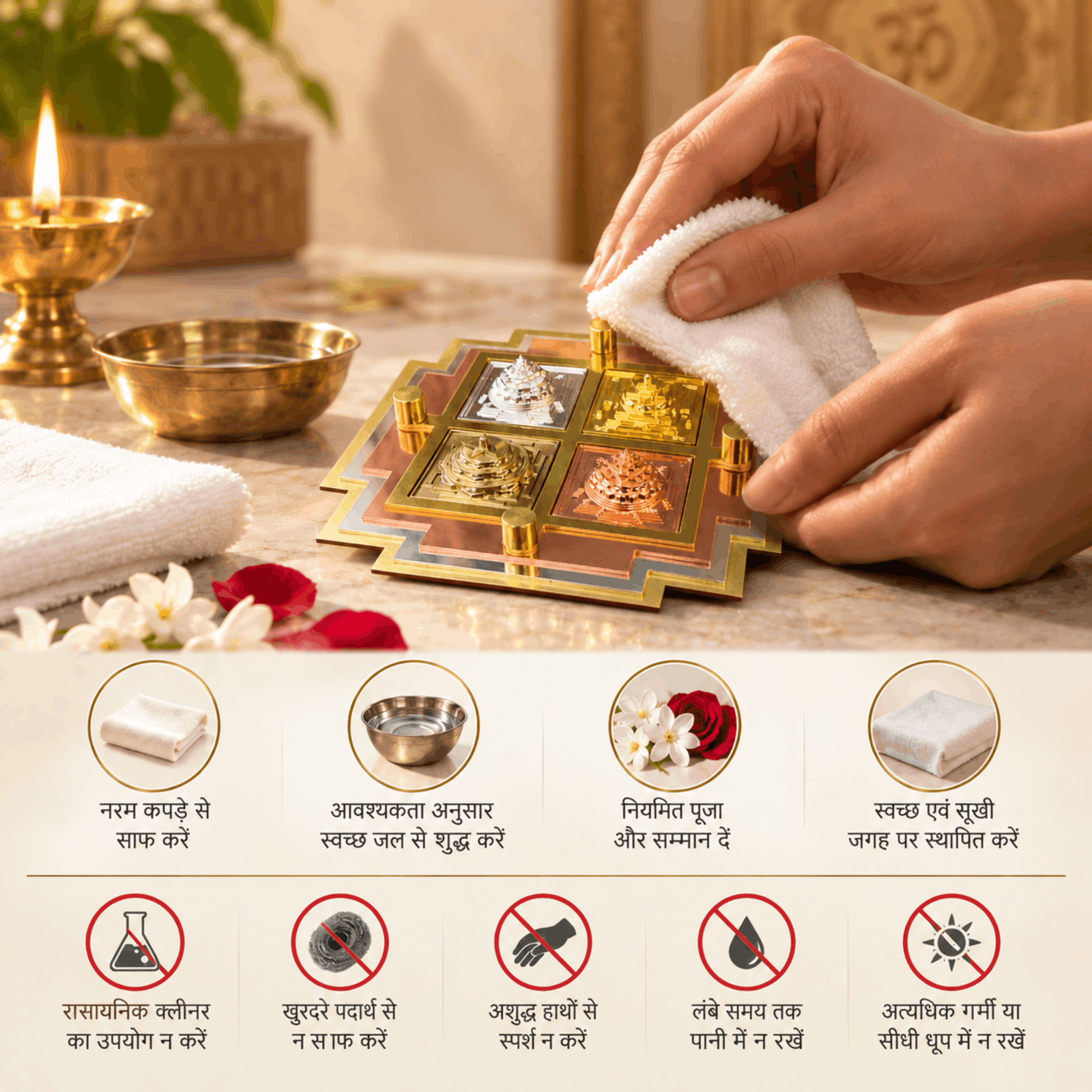
- Keep the Yantra clean and respectfully maintained.
- Gently wipe the Yantra with a soft, clean cloth and avoid rough fabrics or vigorous rubbing.
- Use clean water only when necessary for cleaning and dry the Yantra thoroughly with a soft cloth afterward.
- Keep the Yantra in the temple or designated worship space on a clean red or yellow cloth.
- Offer fresh and clean flowers during worship and regularly remove old or dried flowers.
- Maintain a clean, sacred, and well-organized environment around the Yantra.
- Avoid unnecessary touching or moving the Yantra from its designated place.
1. What is the significance of Sri Sarva Siddhi Yantra?
Sri Sarva Siddhi Yantra is traditionally regarded as a symbol of prosperity, wisdom, success, positive energy, mental peace, and spiritual harmony. It represents the eight divine siddhis and brings together multiple sacred energies within one geometric framework.
2. Which sacred energies are associated with Sri Sarva Siddhi Yantra?
The Yantra is traditionally associated with Lord Shiva, Goddess Lakshmi, Lord Ganesha, Vastu–Navgraha energies, and Lord Kuber. It also incorporates the symbolism of the Shree Yantra, Kuber Yantra, Ganesh Yantra, and Navgraha Yantra.
3. Where should Sri Sarva Siddhi Yantra be placed?
It may be placed in a home temple, prayer room, meditation space, office, or study area. Traditionally, the East and North-East (Ishaan) directions are considered suitable for spiritual practice.
4. Does Sri Sarva Siddhi Yantra require Prana Pratishtha?
According to the Yantra tradition, a formal Sthapana or Prana Pratishtha may be performed by a knowledgeable Pandit. The process may include purification, Sankalpa, invocation, sacred mantras, offerings, and Aarti.
5. How should Sri Sarva Siddhi Yantra be worshipped daily?
Daily worship can be kept simple and regular. You may light a Diya, offer fresh flowers and incense, and recite an appropriate Mantra, Stotra, or Shri Suktam according to your tradition.
6. What are the traditional benefits associated with Sri Sarva Siddhi Yantra?
It is traditionally associated with positive energy, prosperity, mental peace, concentration, success, family harmony, emotional balance, and energetic balance within a space.
7. Can Sri Sarva Siddhi Yantra be kept at home or in an office?
Yes. The catalogue describes it as suitable for homes, workplaces, offices, study areas, meditation spaces, and other clean and peaceful places.
8. How should Sri Sarva Siddhi Yantra be maintained?
Keep the Yantra clean and respectfully maintained. Gently wipe it with a soft, clean cloth, use clean water only when necessary, and keep it on a clean red or yellow cloth in the designated worship space.
9. Does the Yantra need to be replaced regularly?
The catalogue describes the properly installed Yantra as a long-term spiritual presence and states that it does not require routine replacement merely because of the passage of time.
10. Can Sri Sarva Siddhi Yantra be used for meditation and spiritual practice?
Yes. The Yantra can be incorporated into regular prayer, meditation, and spiritual practice, and may serve as a meaningful sacred focal point for devotion and mindful practice.





Reviews
There are no reviews yet.